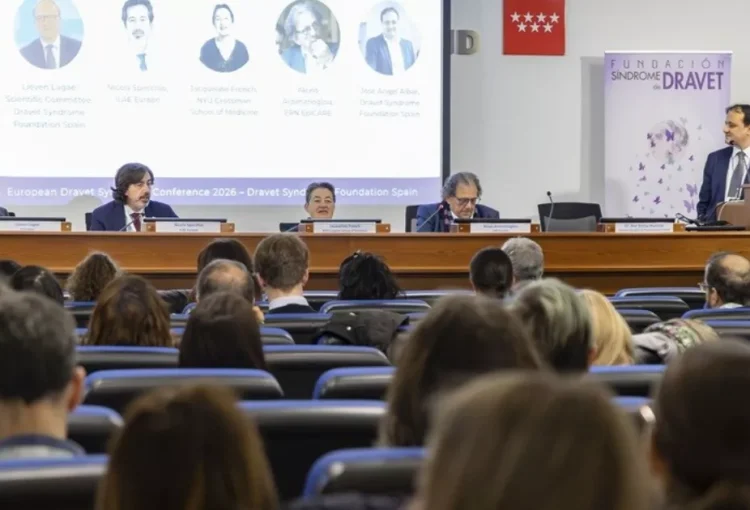
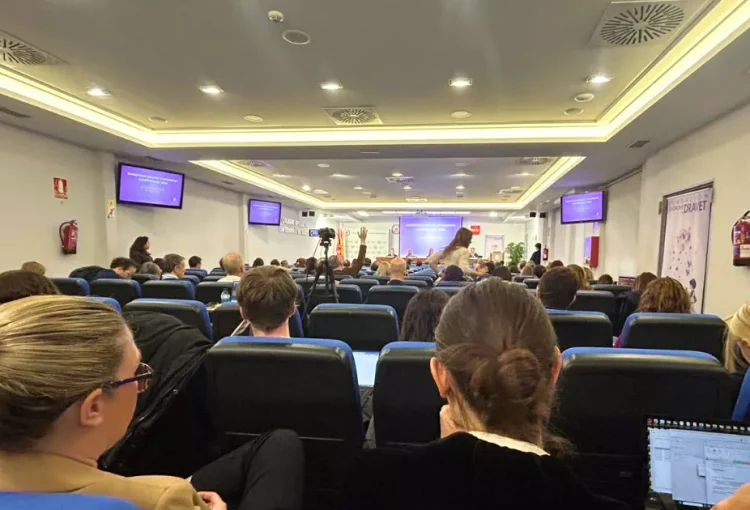
Segundo día de la European Dravet Syndrome Conference 2026: ciencia, ensayos clínicos y un futuro que se acelera

La segunda jornada de nuestra European Dravet Syndrome Conference 2026 estuvo marcada por un enfoque profundamente técnico, centrado en cómo deben diseñarse los ensayos clínicos para enfermedades tan complejas como el síndrome de Dravet, y en cómo las terapias genéticas y de precisión están transformando el panorama de investigación. También se presentaron resultados de estudios novedosos sobre sueño, lenguaje, temperatura corporal y complicaciones musculoesqueléticas, junto con reflexiones éticas y metodológicas que influirán directamente en los tratamientos del futuro. A continuación, compartimos un resumen de todo lo que dejó este segundo y último día de conferencia.

Repensar los ensayos clínicos en el síndrome de Dravet: un nuevo marco para medir lo que importa

La mañana comenzó con un panel de expertos que analizó por qué los ensayos clínicos tradicionales no encajan bien con las características del síndrome de Dravet. Tanto Jacqueline French como Stéphane Auvin explicaron que los diseños habituales, con grupos placebo estrictos y enmascaramiento absoluto, pueden no ser adecuados en enfermedades donde las crisis son impredecibles, la variabilidad entre pacientes es enorme y la vulnerabilidad clínica es alta. Destacaron que mantener a un paciente con placebo durante meses o exponerlo a múltiples procedimientos puede no ser ético en todos los casos.

Se insistió en que, para interpretar correctamente si un tratamiento funciona, no basta con contar crisis. En el síndrome de Dravet, donde las crisis pueden aumentar o disminuir sin causa aparente, es esencial incorporar medidas de comportamiento, sueño, atención, interacción social o calidad de vida. También se debatió la necesidad de crear ensayos más flexibles, que permitan adaptar objetivos y criterios según la evolución del paciente. El mensaje central fue claro: si queremos acelerar el acceso a tratamientos innovadores, debemos rediseñar los ensayos clínicos pensando realmente en las personas con síndrome de Dravet y sus familias.

Ensayos específicos para DEEs: ¿por síndrome, por biología o por tipo de crisis?

En la segunda sesión de la mañana se discutió si las encefalopatías epilépticas y del desarrollo (DEEs), como el síndrome de Dravet, requieren ensayos clínicos diferenciados o no. La conversación reunió a investigadores, profesionales de la industria farmacéutica y redes europeas de epilepsia, y giró en torno a una pregunta clave: ¿debemos probar los fármacos según el síndrome, según la mutación genética o según el tipo de crisis?

Se expusieron varios argumentos. Por un lado, algunos mecanismos biológicos, como la disfunción de interneuronas o los canales iónicos afectados, son compartidos por varios síndromes, lo que permitiría ensayos “transversales” más ágiles. Por otro lado, el síndrome de Dravet tiene una biología tan particular que los ensayos demasiado generales podrían no detectar sus beneficios reales. Además, se recordó que las agencias reguladoras y sistemas de salud (aseguradoras en EE.UU.) suelen exigir una etiqueta específica (“aprobado para Dravet”) para el reembolso, lo que limita el acceso a fármacos útiles desarrollados para otras epilepsias raras.

El consenso final apuntó a un equilibrio: ensayos más flexibles y modernos, apoyados en la biología, pero con resultados interpretables para la comunidad clínica y para las familias.

Terapias de precisión: un recorrido por las estrategias genéticas que cambiarán el futuro

Uno de los momentos más interesantes del día fue también el taller dirigido por Rajvinder Karda (UCL), que repasó las distintas terapias genéticas en desarrollo, mostrando hasta qué punto el campo ha avanzado en solo unos pocos años.

Se presentaron los progresos de los oligonucleótidos antisentido (ASO), que aumentan la producción de Nav1.1 a partir del gen SCN1A. Los resultados preclínicos en ratones demostraron mejoras en supervivencia, reducción de crisis y estabilización del desarrollo. En humanos, los ensayos en curso han mostrado reducciones muy significativas de crisis y señales sugestivas de mejoras cognitivas y adaptativas tras varios años de seguimiento.

También se describieron varias aproximaciones de terapia génica utilizando vectores virales, como AAV9 o sistemas «dual AAV», diseñados para introducir o modular el gen SCN1A. Muchos de estos estudios lograron restaurar parcialmente la función neuronal, reducir crisis y mejorar comportamientos en modelos animales.

Por último, se abordaron técnicas de edición genética, como base editing, así como novedosas estrategias de reparación de ARN, cuyos primeros resultados han sido muy prometedores en supervivencia, expresión proteica y sensibilidad a convulsiones en modelos experimentales. El taller transmitió una idea muy clara: estamos más cerca que nunca de terapias verdaderamente modificadoras de la enfermedad, capaces de cambiar no solo las crisis sino el curso global del síndrome.

Nuevas fronteras del conocimiento: sueño, temperatura y modelos celulares avanzados

La tarde comenzó con presentaciones científicas que exploraron aspectos poco estudiados del síndrome. Una de ellas fue la de Moran Rubinstein de la Universidad de Tel Aviv, que mostró que los modelos animales de Dravet no solo tienen problemas de sueño, sino también dificultades para regular la temperatura corporal. En condiciones normales, al iniciar el sueño, la temperatura interna desciende ligeramente y aumenta la actividad delta, una señal fundamental del sueño profundo. En los ratones con Dravet, ninguno de estos mecanismos funcionaba correctamente.

Lo más sorprendente fue comprobar que restaurar parcialmente la función de SCN1A en el hipotálamo, la región cerebral que gobierna tanto el sueño como la temperatura, lograba corregir parte de estas alteraciones: los animales dormían mejor, alcanzaban sueño profundo y respondían de manera más normal al calor. Estos resultados sugieren que los problemas de sueño en Dravet tienen raíces biológicas profundas y que podrían convertirse en marcadores sensibles para medir la eficacia de futuras terapias genéticas.

Otra presentación destacada trató sobre modelos personalizados en chip creados a partir de células madre de pacientes. Estos modelos permiten registrar la actividad eléctrica neuronal y generar “huellas de crisis” específicas de cada persona. Los investigadores creen que, en un futuro, podrían servir para evaluar medicamentos de manera más precisa y personalizada, algo especialmente relevante en síndromes tan heterogéneos como Dravet.

También se presentaron avances en edición genética mediante base editing, que permite mejorar la traducción del gen SCN1A ralentizado por elementos reguladores. Los resultados preliminares en animales demostraron aumentos en la expresión de Nav1.1 y mejoras funcionales en interneuronas, reforzando el potencial de esta tecnología como aproximación terapéutica.

Lo que revelan los datos “ómics”: metabolismo, inflamación y redes neuronales complejas

En un taller especialmente técnico, Heidrun Potschka abordó cómo las técnicas ómicas (genómica, metabolómica, transcriptómica) están aportando una visión más profunda del síndrome. Los estudios recientes muestran alteraciones repetidas en tres grandes áreas: la comunicación sináptica, las rutas metabólicas energéticas y la señalización inflamatoria basada en lípidos. Estos resultados convergen en un mensaje: el síndrome de Dravet no afecta solo a un canal de sodio, sino a redes neuronales complejas que se remodelan con el tiempo, influidas tanto por la mutación genética como por la carga de crisis. Esto refuerza la importancia de estudiar no solo la genética, sino también las consecuencias a nivel celular, energético e inflamatorio.

Avances clínicos: lenguaje en edades tempranas y una complicación olvidada: la escoliosis

La parte final del día abordó dos áreas muy relevantes para la vida diaria de las familias.

En primer lugar, un miembro del equipo Eital de la Universidad Complutense de Madrid presentó un estudio sobre el desarrollo del lenguaje entre los 3 y 6 años en niños con Dravet. El estudio mostró un retraso profundo en el lenguaje expresivo, mucho mayor que en la comprensión, y una gran variabilidad entre pacientes. Se observó que los niños con mejores perfiles cognitivos lograban avances más estables, mientras que la presencia de características del espectro autista añadía una capa adicional de dificultades. La conclusión fue clara: la intervención temprana en comunicación es esencial para mejorar la calidad de vida y la participación social.

A continuación, se presentó un trabajo sobre escoliosis en el síndrome de Dravet, una complicación aún poco estudiada pero más frecuente de lo que se pensaba. En una cohorte analizada, aproximadamente un tercio de los pacientes presentaba escoliosis clínicamente relevante, un porcentaje muy superior al de la población general. Las consecuencias pueden incluir dolor, pérdida de movilidad, infecciones respiratorias recurrentes o necesidad de cirugía. Se observó que la escoliosis suele debutar en la adolescencia, lo que subraya la importancia de incorporar la revisión ortopédica sistemática a la atención estándar, así como el papel clave de la fisioterapia y el seguimiento motor durante la pubertad y la vida adulta.

Un cierre lleno de colaboración, reconocimiento y compromiso

La jornada concluyó con un momento muy especial para la comunidad científica: la entrega de los premios a las mejores presentaciones del día por parte de investigadores jóvenes. El premio a la Mejor presentación de póster científico fue para Samantha Hanson, del Seattle Children’s Research Institute, por su trabajo Dose Dependency of a Novel Interneuron-Specific AAV Gene Replacement Therapy for Dravet Syndrome, que presentó resultados especialmente prometedores sobre la modulación génica dirigida específicamente a interneuronas, una estrategia que podría transformar la manera en que entendemos y tratamos la enfermedad en el futuro inmediato.

El premio a la Mejor presentación científica oral, en un hecho poco habitual, terminó en empate. Por una parte, Albina Farkhutdinova, del Hertie Institute for Clinical Brain Research, fue reconocida por su investigación Early Chronic Kv3.1 Modulation Improves Phenotypic Alterations in a Mouse Model of Dravet Syndrome, una aproximación innovadora que apunta a intervenir muy tempranamente sobre mecanismos clave para modificar el curso de la enfermedad. Por otra parte, Georgii Krivoshein, del Leiden University Medical Center, fue premiado por Functional Excitation-Inhibition Ratio as a Marker for Indicating Anti-Seizure Medication Efficacy, un estudio que propone nuevas formas de medir la eficacia real de los tratamientos mediante biomarcadores de equilibrio neuronal, un área de enorme importancia para mejorar la precisión de los ensayos clínicos y acelerar la llegada de terapias efectivas.

Un mensaje de esperanza: la fuerza de una comunidad que avanza unida

Tras la entrega de premios, se destacó el valor inmenso de la colaboración internacional y el extraordinario crecimiento de la comunidad científica dedicada al síndrome de Dravet. Pero, sobre todo, subrayaron algo que resonó profundamente en la sala: el papel irremplazable de las familias y de la Fundación Síndrome de Dravet como motor de todo este movimiento.

Porque si algo quedó claro en esta conferencia es que el progreso no ocurre por inercia: ocurre porque existe una comunidad científica, clínica, social y familiar que empuja, que pregunta, que investiga, que comparte, que sostiene y que jamás se rinde. La Fundación Síndrome de Dravet ha sido, y continúa siendo, un punto de encuentro imprescindible donde se unen pacientes, familias, investigadores, médicos y compañías farmacéuticas para acelerar un futuro más esperanzador para todas las personas y familias con síndrome de Dravet.

El cierre de la conferencia dejó una sensación de emoción, gratitud y determinación colectiva. La ciencia está avanzando más rápido que nunca, con avances que cada vez son más tangibles. Pero aun así, lo que más emocionó a quienes llenaban la sala no fue el aspecto técnico, sino la certeza compartida de que no estamos solos. Que seguimos construyendo juntos un horizonte donde podamos vivir más, mejor y acompañados por una comunidad global comprometida e imparable.

La European Dravet Syndrome Conference 2026 terminó con un mensaje sencillo y poderoso: el futuro está cada vez más cerca, y la Fundación, como siempre, está en el centro de ese futuro.

Flechas rojas redes sociales
Compartir en Facebook
Compartir en Twitter
Compartir por correo electrónico
Compartir en Whatsapp

Déjanos tu comentario

Últimas publicaciones

Día 2 European Dravet Syndrome Conference 2026

Segundo día de la European Dravet Syndrome Conference 2026: ciencia, ensayos clínicos y un futuro que se acelera

La segunda jornada de nuestra European Dravet Syndrome Conference 2026 estuvo marcada por un enfoque profundamente técnico, centrado en cómo deben diseñarse los ensayos clínicos para enfermedades tan complejas como el síndrome de Dravet, y en cómo las terapias genéticas y de precisión están transformando el panorama de investigación. También se presentaron resultados de estudios

Leer más »
Día 1 European Dravet Syndrome Conference 2026

Primer día de la European Dravet Syndrome Conference 2026: avances, voces y futuro

Ayer celebramos en Madrid la primera jornada de la European Dravet Syndrome Conference 2026, un encuentro que reunió a especialistas, investigadores, clínicos, profesionales de la industria farmacéutica y organizaciones de pacientes procedentes de todas las partes del mundo, desde Australia o Japón hasta Canadá, Estados Unidos o Brasil. Es realmente increíble ver cómo nuestra conferencia

Leer más »

¡Haz tu donación!

Tu aportación se destinará a ayudar a nuestros guerreros y sus familias en su lucha contra el síndrome de Dravet, para conseguir que no pierdan nunca la sonrisa.

Esperanza
Translate »
Scroll al inicio

TERMS & CONDITIONS

The Dravet Syndrome Conference 2023 is organised by Dravet Syndrome Foundation Spain, whose registered office is located at Calle Doctor Fleming, 30, 28036 Madrid, Spain.

The conference shall take place at the Official College of Nursing of Madrid, at Avenida de Menéndez Pelayo, 93, 28007 Madrid, Spain, on Thursday 23rd of March 2023. Attendance to this conference is free of charge, but mandatory for organisational reasons.

Participants must register online at www.dravetconference.com. Upon registration, each participant will receive an electronic confirmation by email. On-site registration will not be be possible. If a participant has not received the official email registration confirmation within 3 days, they must contact the conference secretariat at [email protected].

The conference registration includes: Attendance to all sessions, oral and visual presentations, all coffee and lunch breaks, and conference documentation with all information about the event. The registration does not include travel and accommodation costs or any other personal expenses.

Admittance to the conference without registration cannot be granted.

Conference Attendance
Upon arrival at the Official College of Nursing of Madrid the day of the event, all participants have to check-in at the onsite Conference Registration Desk. The desk will open on 23rd of March at 8:30 a.m. Upon registration onsite, the conference team will provide participants with information about the event and a badge, which should be worn visibly at all times. The personalised badge authorises participants to attend all conference sessions, and lunch and coffee breaks.

Cancellation Policy
Dravet Syndrome Foundation Spain reserves the right to cancel any registration forthwith and without liability on its part in the event of any damage to, or destruction of the venue by fire, shortage of labour, strikes, industrial unrest, public health measures, or any other cause beyond the control of the Dravet Syndrome Foundation Spain, which shall prevent it from performing its obligations. In these circumstances, every effort will be made to find an alternative format/venue or propose a new date for the conference. Should the conference be cancelled for any reason, airfares, hotels, or other costs incurred by the participants are not reimbursed by the Dravet Syndrome Foundation Spain.

Any participant is allowed to cancel his/her registration but must notify this to the conference organisers by e-mail at [email protected] within a minimum of 10 days prior the event. Failure to attend the event without prior written notification by email may incur a no-show fee, which shall cover individual organizational, material and catering costs.

Name Change
All registrations are only valid for the respective person mentioned in the form. A registered participant unable to attend the conference may nominate (free of charge) a substitute participant by notifying the conference organisers by email at [email protected] before 16th of March 2023. The procedure allows giving the last name, first name, and email address of the new participant.

Personal Data
Upon registration, the participant authorises Dravet Syndrome Foundation Spain to use their personal data stated above to inform the participant of any further conferences, events, or information concerning the conference and Dravet Syndrome Foundation Spain’s activities. The conference booklet online will only contain authors, titles, and affiliations of submitted abstracts, but no full abstract texts. The conference printed booklet will contain full abstract texts from all participants. Conference certificates will be sent to the participants as a PDF document upon request at [email protected]. Only the name & affiliation will be stated in the certificate, not the email addresses of the participants.

Information is collected by an automated computer system that manages registrations. Security and confidentiality are guaranteed by state-of-the-art technical tools. However, Dravet Syndrome Foundation Spain declines any responsibility concerning data security transmitted through the internet.

Photography
The conference is held in public; therefore, we do not ban participants, exhibitors, partners and other companies from taking photographs of conference activities and participants, and share it via social media. By participating in the conference, you approve that general pictures will be taken and used for our Social Media output, our websites and other communication purposes. You hereby waive any right to oppose, and expressly authorise the organiser to make them available on the Internet or as it may seem fit. Author’s presentation slides shall not be photographed by any conference participant. 

Disclaimer
The conference organiser cannot be held responsible for any loss, injury or damage to any property, whatever the cause may be. Should, for any reason outside the organiser’s control (e.g., political or economic circumstances or a case of ‘force majeure’), the venue or speakers change, or the event be cancelled, the organiser will endeavour to reschedule, but shall not be held responsible for any costs, damages or expenses incurred by the participants. If for any reason the organiser decides to make material changes to this conference, the organiser is not responsible for airfares, hotels or other costs incurred by the participants. The participant takes part in the conference, all tours, and trips at his own risk.

Copyright
The participant is allowed to use the conference documentation exclusively for his/her personal needs.

TERMS & CONDITIONS

The European Dravet Syndrome Advanced Therapies (EDSAT) Meeting 2023 is organised by Dravet Syndrome Foundation Spain, whose registered office is located at Calle Doctor Fleming, 30, 28036 Madrid, Spain.

The conference shall take place at the Official College of Nursing of Madrid, at Avenida de Menéndez Pelayo, 93, 28007 Madrid, Spain, on Friday 24th of March 2023. Attendance to this conference is free of charge, but mandatory for organisational reasons.

Participants must register online at www.dravetconference.com. Upon registration, each participant will receive an electronic confirmation by email. On-site registration will not be be possible. If a participant has not received the official email registration confirmation within 3 days, they must contact the conference secretariat at [email protected].

The conference registration includes: Attendance to all sessions, oral and visual presentations, all coffee and lunch breaks, and conference documentation with all information about the event. The registration does not include travel and accommodation costs or any other personal expenses.

Admittance to the conference without registration cannot be granted.

Conference Attendance
Upon arrival at the Official College of Nursing of Madrid the day of the event, all participants have to check-in at the onsite Conference Registration Desk. The desk will open on 24th of March at 8:30 a.m. Upon registration onsite, the conference team will provide participants with information about the event and a badge, which should be worn visibly at all times. The personalised badge authorises participants to attend all conference sessions, and lunch and coffee breaks.

Cancellation Policy
Dravet Syndrome Foundation Spain reserves the right to cancel any registration forthwith and without liability on its part in the event of any damage to, or destruction of the venue by fire, shortage of labour, strikes, industrial unrest, public health measures, or any other cause beyond the control of the Dravet Syndrome Foundation Spain, which shall prevent it from performing its obligations. In these circumstances, every effort will be made to find an alternative format/venue or propose a new date for the conference. Should the conference be cancelled for any reason, airfares, hotels, or other costs incurred by the participants are not reimbursed by the Dravet Syndrome Foundation Spain.

Any participant is allowed to cancel his/her registration but must notify this to the conference organisers by e-mail at [email protected] within a minimum of 10 days prior the event. Failure to attend the event without prior written notification
by email may incur a no-show fee, which shall cover individual organizational, material and catering costs.

Name Change
All registrations are only valid for the respective person mentioned in the form. A registered participant unable to attend the conference may nominate (free of charge) a substitute participant by notifying the conference organisers by email at [email protected] before 17th of March 2023. The procedure allows giving the last name, first name, and email address of the new participant.

Personal Data
Upon registration, the participant authorises Dravet Syndrome Foundation Spain to use their personal data stated above to inform the participant of any further conferences, events, or information concerning the conference and Dravet Syndrome Foundation Spain’s activities. The conference booklet online will only contain authors, titles, and affiliations of submitted abstracts, but no full abstract texts. The conference printed booklet will contain full abstract texts from all participants. Conference certificates will be sent to the participants as a PDF document upon request at [email protected]. Only the name & affiliation will be stated in the certificate, not the email addresses of the participants.

Information is collected by an automated computer system that manages registrations. Security and confidentiality are guaranteed by state-of-the-art technical tools. However, Dravet Syndrome Foundation Spain declines any responsibility concerning data security transmitted through the internet.

Photography
The conference is held in public; therefore, we do not ban participants, exhibitors, partners and other companies from taking photographs of conference activities and participants, and share it via social media. By participating in the conference, you approve that general pictures will be taken and used for our Social Media output, our websites and other communication purposes. You hereby waive any right to oppose, and expressly authorise the organiser to make them available on the Internet or as it may seem fit. Author’s presentation slides shall not be photographed by any conference participant.

Disclaimer
The conference organiser cannot be held responsible for any loss, injury or damage to any property, whatever the cause may be. Should, for any reason outside the organiser’s control (e.g., political or economic circumstances or a case of ‘force majeure’), the venue or speakers change, or the event be cancelled, the organiser will endeavour to reschedule, but shall not be held responsible for any costs, damages or expenses incurred by the participants. If for any reason the organiser decides to make material changes to this conference, the organiser is not responsible for airfares, hotels or other costs incurred by the participants. The participant takes part in the conference, all tours, and trips at his own risk.

Copyright
The participant is allowed to use the conference documentation exclusively for his/her personal needs.

TERMS & CONDITIONS

The European Dravet Syndrome Advanced Therapies (EDSAT) Meeting 2022 is organised by Dravet Syndrome Foundation Spain, whose registered office is located at Calle Doctor Fleming, 30, 28036 Madrid, Spain.

The conference shall take place at the Illustrious Official College of Physicians of Madrid, at Calle de Santa Isabel, 51, 28012 Madrid, Spain, on Friday 1st of April 2022. Attendance to this conference is free of charge, but mandatory for organisational reasons. Participants must register online at www.dravetconference.com. Upon registration, each participant will receive an electronic confirmation by email. On-site registration will not be be possible. If a participant has not received the official email registration confirmation within 3 days, they must contact the conference secretariat at [email protected].

The conference registration includes: Attendance to all sessions, oral and visual presentations, all coffee and lunch breaks, and conference documentation with all information about the event. The registration does not comprise travelling and accommodation costs or any other personal expenses.

Admittance to the workshop without registration cannot be granted.

Conference Attendance
Upon arrival at the Illustrious Official College of Physicians of Madrid the day of the event, all participants have to register at the onsite Conference Registration Desk. The desk will open on 1st of April at 8:30 a.m. Upon registration onsite, the conference team will provide participants with information about the event and a badge, which should be worn visibly at all times. The personalised badge authorises participants to attend all conference sessions, and lunch and coffee breaks.

Cancellation Policy
Dravet Syndrome Foundation Spain reserves the right to cancel any registration forthwith and without liability on its part in the event of any damage to, or destruction of the venue by fire, shortage of labour, strikes, industrial unrest, public health measures, or any other cause beyond the control of the Dravet Syndrome Foundation Spain, which shall prevent it from performing its obligations. In these circumstances, every effort will be made to find an alternative format/venue or propose a new date for the conference. Should the conference be cancelled for any reason, airfares, hotels, or other costs incurred by the participants are not reimbursed by the Dravet Syndrome Foundation Spain.

Any participant is allowed to cancel his/her registration but must notify this to the conference organisers by e-mail at [email protected] within a minimum of 10 days
prior the event. Failure to attend the event without prior written notification
by email may incur a no-show fee, which shall cover individual organizational,
material and catering costs.

Name Change
All registrations are only valid for the respective person mentioned in the form. A registered participant unable to attend the conference may nominate (free of charge) a substitute participant by notifying the conference organisers by email at [email protected] before 24th of March 2022. The procedure allows giving the last name, first name, and email address of the new participant.

Personal Data
Upon registration, the participant authorises Dravet Syndrome Foundation Spain to use their personal data stated above to inform the participant of any further conferences, events, or information concerning the conference and Dravet Syndrome Foundation Spain’s activities. The conference booklet online will only contain authors, titles, and affiliations of submitted abstracts, but no full abstract texts. The conference printed booklet will contain full abstract texts from all participants. Conference certificates will be sent to the participants as a PDF document upon request at [email protected]. Only the name & affiliation will be stated in the certificate, not the email addresses of the participants.

Information is collected by an automated computer system that manages registrations. Security and confidentiality are guaranteed by state-of-the-art technical tools. However, Dravet Syndrome Foundation Spain declines any responsibility concerning data security transmitted through the internet.

Photography
The conference is held in public; therefore, we do not ban participants, exhibitors, partners and other companies from taking photographs of conference activities and participants, and share it via social media. By participating in the conference, you approve that general pictures will be taken and used for our Social Media output, our websites and other communication purposes. You hereby waive any right to oppose, and expressly authorise the organiser to make them available on the Internet or as it may seem fit. Author’s presentation slides shall not be photographed by any conference participant.

Disclaimer
The conference organiser cannot be held responsible for any loss, injury or damage to any property, whatever the cause may be. Should, for any reason outside the organiser’s control (e.g., political or economic circumstances or a case of ‘force majeure’), the venue or speakers change, or the event be cancelled, the organiser will endeavour to reschedule, but shall not be held responsible for any costs, damages or expenses incurred by the participants. If for any reason the organiser decides to make material changes to this conference, the organiser is not responsible for airfares, hotels or other costs incurred by the participants. The participant takes part in the conference, all tours, and trips at his own risk.

Copyright
The participant is allowed to use the conference documentation exclusively for his/her personal needs.

TERMS & CONDITIONS

The Dravet Syndrome Conference 2022 is organised by Dravet Syndrome Foundation Spain, whose registered office is located at Calle Doctor Fleming, 30, 28036 Madrid, Spain.

The conference shall take place at the Illustrious Official College of Physicians of Madrid, at Calle de Santa Isabel, 51, 28012 Madrid, Spain, on Thursday 31st of March 2022. Attendance to this conference is free of charge, but mandatory for organisational reasons. Participants must register online at www.dravetconference.com. Upon registration, each participant will receive an electronic confirmation by email. On-site registration will not be be possible. If a participant has not received the official email registration confirmation within 3 days, they must contact the conference secretariat at [email protected].

The conference registration includes: Attendance to all sessions, oral and visual presentations, all coffee and lunch breaks, and conference documentation with all information about the event. The registration does not include travel and accommodation costs or any other personal expenses.

Admittance to the conference without registration cannot be granted.

Conference Attendance
Upon arrival at the Illustrious Official College of Physicians of Madrid the day of the event, all participants have to register at the onsite Conference Registration Desk. The desk will open on 31st of March at 8:30 a.m. Upon registration onsite, the conference team will provide participants with information about the event and a badge, which should be worn visibly at all times. The personalised badge authorises participants to attend all conference sessions, and lunch and coffee breaks. 

Cancellation Policy
Dravet Syndrome Foundation Spain reserves the right to cancel any registration forthwith and without liability on its part in the event of any damage to, or destruction of the venue by fire, shortage of labour, strikes, industrial unrest, public health measures, or any other cause beyond the control of the Dravet Syndrome Foundation Spain, which shall prevent it from performing its obligations. In these circumstances, every effort will be made to find an alternative format/venue or propose a new date for the conference. Should the conference be cancelled for any reason, airfares, hotels, or other costs incurred by the participants are not reimbursed by the Dravet Syndrome Foundation Spain.

Any participant is allowed to cancel his/her registration but must notify this to the conference organisers by e-mail at [email protected] within a minimum of 10 days prior the event. Failure to attend the event without prior written notification by email may incur a no-show fee, which shall cover individual organizational, material and catering costs.

Name Change
All registrations are only valid for the respective person mentioned in the form. A registered participant unable to attend the conference may nominate (free of charge) a substitute participant by notifying the conference organisers by email at [email protected] before 24th of March 2022. The procedure allows giving the last name, first name, and email address of the new participant.

Personal Data
Upon registration, the participant authorises Dravet Syndrome Foundation Spain to use their personal data stated above to inform the participant of any further conferences, events, or information concerning the conference and Dravet Syndrome Foundation Spain’s activities. The conference booklet online will only contain authors, titles, and affiliations of submitted abstracts, but no full abstract texts. The conference printed booklet will contain full abstract texts from all participants. Conference certificates will be sent to the participants as a PDF document upon request at [email protected]. Only the name & affiliation will be stated in the certificate, not the email addresses of the participants.

Information is collected by an automated computer system that manages registrations. Security and confidentiality are guaranteed by state-of-the-art technical tools. However, Dravet Syndrome Foundation Spain declines any responsibility concerning data security transmitted through the internet.

Photography
The conference is held in public; therefore, we do not ban participants, exhibitors, partners and other companies from taking photographs of conference activities and participants, and share it via social media. By participating in the conference, you approve that general pictures will be taken and used for our Social Media output, our websites and other communication purposes. You hereby waive any right to oppose, and expressly authorise the organiser to make them available on the Internet or as it may seem fit. Author’s presentation slides shall not be photographed by any conference participant. 

Disclaimer
The conference organiser cannot be held responsible for any loss, injury or damage to any property, whatever the cause may be. Should, for any reason outside the organiser’s control (e.g., political or economic circumstances or a case of ‘force majeure’), the venue or speakers change, or the event be cancelled, the organiser will endeavour to reschedule, but shall not be held responsible for any costs, damages or expenses incurred by the participants. If for any reason the organiser decides to make material changes to this conference, the organiser is not responsible for airfares, hotels or other costs incurred by the participants. The participant takes part in the conference, all tours, and trips at his own risk.

Copyright
The participant is allowed to use the conference documentation exclusively for his/her personal needs.