I DEEs Research Roundtable
By invitation only
I DEEs Research Roundtable
From Science to Impact: advancing clinical trials, translational research and innovative therapies in DEEs
The DEE Research Roundtable is a two-day working meeting convened by Fundación para la Investigación del Síndrome de Dravet, the Spanish research foundation for Dravet syndrome, bringing clinicians, researchers and industry around the same table to turn discussion on developmental and epileptic encephalopathies into shared priorities and concrete next steps.
Dates22-23 October 2026Thursday afternoon and Friday morning
VenueInnova BuildingUMH Science Park, Elche
FormatStrategic roundtableModerated and rotating group discussion
AccessInvitation onlyNo open registration
The meeting
Why the DEE Research Roundtable matters
Developmental and epileptic encephalopathies (DEEs) are a group of rare and severe neurological disorders characterised by early-onset, drug-resistant epilepsy and significant developmental impairment. Despite major advances in genetics and neuroscience, they remain conditions with a high unmet medical need.
The past decade has brought a rapid expansion of novel therapeutic approaches, and with it a growing recognition that traditional clinical trial paradigms are not fully adapted to the complexity and heterogeneity of these conditions.
- Limited and non-standardised clinical endpoints beyond seizure frequency
- Difficulties in trial design and recruitment in rare paediatric populations
- Lack of validated biomarkers and translational tools
- Fragmentation between preclinical research, clinical development and patient realities

01
Bridging silos
Clinicians, researchers, industry partners and patients rarely have the opportunity to interact in a setting designed for true co-creation. This meeting enables direct exchange and alignment across sectors.
02
Better clinical development
By focusing on trial design, endpoints and feasibility, the roundtable aims to generate actionable insights that can directly inform future therapeutic programmes.
03
Tangible outcomes
The goal is not only discussion, but the identification of shared priorities and next steps, potentially leading to collaborative initiatives and consensus outputs on DEE research priorities.
Please note
The I DEEs Research Roundtable is an invitation-only meeting with a limited number of participants, so that every attendee can take an active part in the discussion. There is no open registration form. If you believe your organisation should be represented, please write to us and we will consider it for this or future editions.
Objectives
What we set out to achieve
Unlike a traditional conference, this roundtable is structured around interactive dialogue, co-creation and actionable outcomes. Five objectives shape the programme.
-
Accelerate translation between basic research, clinical practice and therapeutic development in DEEs.
-
Create structured dialogue between clinicians, researchers, patients and industry.
-
Identify actionable priorities in clinical trial design, endpoints and outcome measures, and biomarkers and translational tools.
-
Deliver clear value for industry partners through meaningful, high-level engagement with the DEE ecosystem in a trusted, pre-competitive setting.
-
Position patient organisations as a connector and facilitator across science, care and innovation.
Who is in the room
- 01 Key opinion leaders: neurologists, epileptologists and geneticists
- 02 Preclinical and translational researchers
- 03 Industry representatives from Medical Affairs, Clinical Development and R&D
- 04 Fundación para la Investigación del Síndrome de Dravet, as convener and patient voice
Programme
Agenda
Two half-days built around short framing talks, moderated panels and rotating small-group tables, closing with a shared roadmap for the next 12 to 24 months.
Day 1 · Thursday 22 October
From trial design to trial reality
Where DEE clinical trials stand, and what they still miss
Arrival and light networking lunch
Opening statements
Where are we in DEE clinical trials, and where are we falling short?
- Stéphane Auvin, Robert Debré University Hospital, APHP, Paris
What are we missing? The patient perspective on DEE clinical trials
- José Ángel Aibar, Fundación para la Investigación del Síndrome de Dravet
Designing fit-for-purpose DEE trials: from endpoints to feasibility
- Stéphane Auvin, Robert Debré University Hospital, APHP, Paris
- Alexis Arzimanoglou, Hospital Sant Joan de Déu, Barcelona
- Alba Sierra Marcos, Hospital de la Santa Creu i Sant Pau, Barcelona
- José Ángel Aibar, Fundación para la Investigación del Síndrome de Dravet
- To confirmÁlvaro Beltrán, Hospital Ruber Internacional, Madrid
Industry updates
Coffee break and networking
Rotating group discussion
- Trial design and feasibility in DEEs
- Integration of real-world evidence into clinical trials
- Trial readiness in DEEs
- Early intervention and timing in clinical trials
Table moderators
- Sébile Tchaicha, ERN EpiCARE / ECET
- Astrid Pañeda, Freelance senior consultant
- To confirmAn-Sofie Schoonjans, Antwerp University Hospital
- To confirmHannah Stamberger, Antwerp University Hospital / VIB-UAntwerp
Synthesis and key takeaways
Wrap-up
- José Ángel Aibar, Fundación para la Investigación del Síndrome de Dravet
Networking dinner
Day 2 · Friday 23 October
Real-world impact and implementation
From evidence to care, access and patient impact
Real-world evidence in DEEs: generating data that matters for care and access
- Simona Balestrini, Meyer Children’s Hospital IRCCS, Florence
Precision medicine in DEEs: translating genetic diagnosis into clinical impact
- To confirmElena Gardella, Danish Epilepsy Centre Filadelfia, Dianalund
Panel discussionMaking innovation work in DEEs, from evidence to patient impact
- To confirmRima Nabbout, Necker-Enfants Malades Hospital, Paris
- To confirmRobert Pleticha, Admedicum
- To confirmHannah Stamberger, Antwerp University Hospital / VIB-UAntwerp
- To confirmCristina Ruedell Reschke, RCSI & FutureNeuro, Dublin
Coffee break
Rotating group discussion
- Implementing innovation in DEEs: from trials to clinical practice
- Building integrated care pathways in DEEs
- Biomarkers and target engagement: bridging preclinical and clinical evidence
- Patient-driven data and participation: from inclusion to co-creation
Table moderators
- Cristina Ruedell Reschke, RCSI & FutureNeuro, Dublin
- To confirmDomenica Battaglia, Fondazione Policlinico Universitario A. Gemelli IRCCS, Rome
- To confirmOlivier Dulac, Necker-Enfants Malades Hospital, Paris
- To confirmJenna Carpenter, UCL Queen Square Institute of Neurology, London
Synthesis and key takeaways
From dialogue to action: defining priorities for the next 12 to 24 months
- Alexis Arzimanoglou, Hospital Sant Joan de Déu, Barcelona
Who does what?
- Astrid Pañeda, Freelance senior consultant
Wrap-up
- José Ángel Aibar, Fundación para la Investigación del Síndrome de Dravet
Light networking lunch
Programme as of September 2026. Speakers and moderators marked «to confirm» have been invited and are pending confirmation. Times and contributions may still change.
Venue and travel
Elche, Alicante
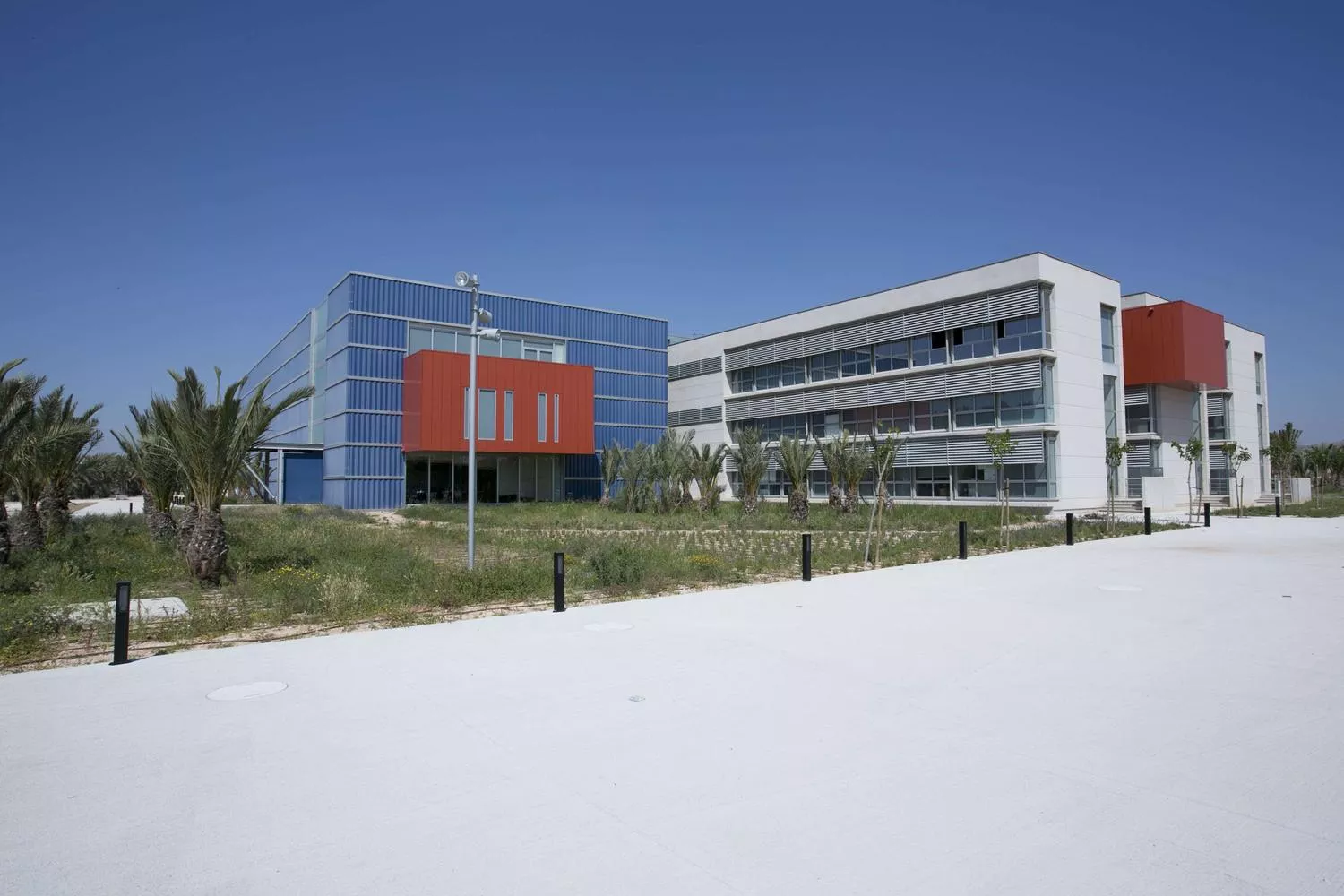
The roundtable takes place in the Innova building of the UMH Science Park (Parque Científico de la Universidad Miguel Hernández), on the Elche campus, a few steps from the laboratory that Fundación para la Investigación del Síndrome de Dravet runs in the same park.
Innova Building, UMH Science Park
Parque Científico de la UMHAvenida de la Universidad s/n
03202 Elche, Alicante
Spain
| By air | Alicante-Elche Miguel Hernández Airport (ALC), about 10 minutes by car from the campus, with direct flights from most European hubs. |
|---|---|
| By train | Elche Carrús and Elche Parque Empresarial stations connect to Alicante and to the national high-speed network via Alicante Terminal. |
| Dinner venue | The networking dinner on 22 October takes place on the Science Park campus. |
| Accommodation | Travel and accommodation arrangements are handled directly with each invited participant by the Foundation. |

With the support of
Sponsors
The I DEEs Research Roundtable is made possible by companies that support open, pre-competitive dialogue in rare and complex epilepsies. Sponsorship does not influence the scientific programme.
Sponsors to be announced shortly
The companies supporting this edition will be listed here ahead of the meeting.
Support the roundtable
Platinum, Gold, Silver and Bronze packages are available, as well as customised options. The full sponsorship booklet is available on request.
Contact
Who to write to
Fundación para la Investigación del Síndrome de Dravet is a non-profit organisation that promotes, encourages and connects the world’s leading research centres working on Dravet syndrome and related disorders.
Participation and programme
Aroa Arboleya
Scientific Coordinator, Fundación para la Investigación del Síndrome de Dravet
aroa.arboleya@dravetfoundation.eu+34 622 88 35 58
Sponsorship and industry
Simona Giorgi
Scientific Director, Fundación para la Investigación del Síndrome de Dravet
fundraising@dravetfoundation.eu+34 622 88 35 58